

English below
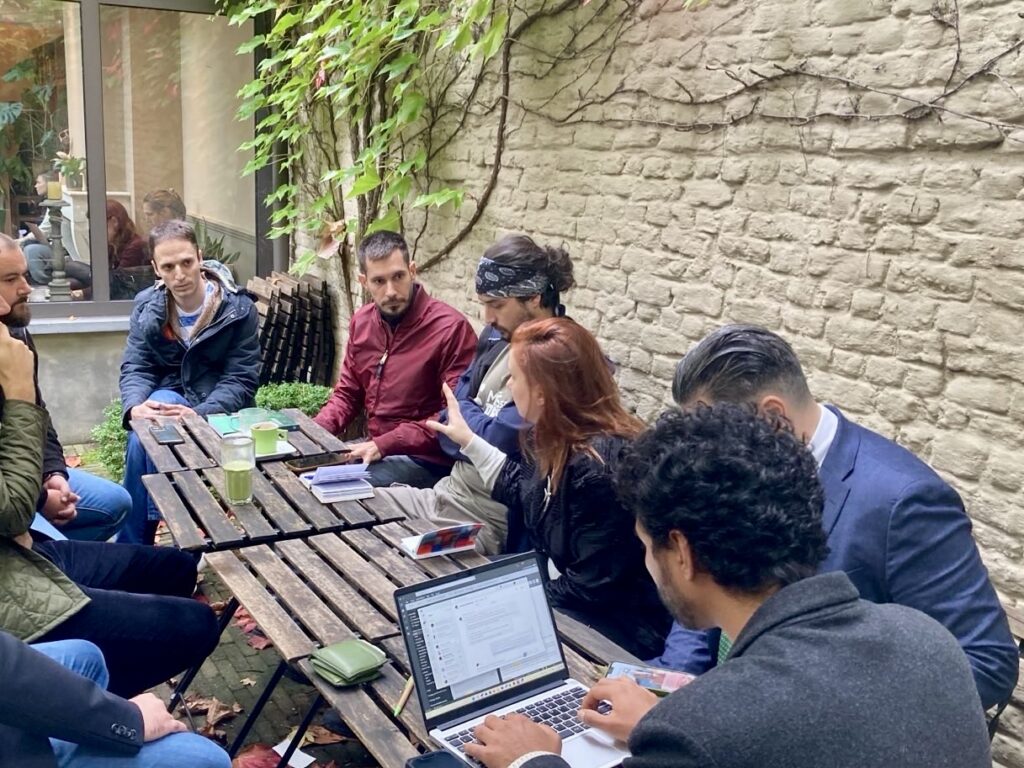
From October 14 to 17, Polekol was part of the delegation of Serbia and Bosnia and Herzegovina visiting Brussels, organized by the European Environment Bureau and the Heinrich Bell Foundation. The series of meetings and events aimed to engage European officials on pressing environmental and human rights issues facing the Western Balkans and strengthen ties between Balkan activists and European environmental advocates. This visit focused on raising awareness of the significant environmental, social and economic risks associated with the proposed lithium mining projects in Serbia and BiH, which, despite strong popular opposition, continue to receive local government support and EU support internationally.
Concerns about critical minerals projects are heightened by weak institutional oversight and the prioritization of private interests over public welfare. The delegation pointed out that these initiatives do not even fulfill the promises of economic prosperity, but contribute to an atmosphere of repression, intimidation and hostility towards environmental activists and critical scientists. The delegation’s assertion that the silence of the EU in the face of violations of human rights, especially civil rights, contributed to the growing distrust among Serbian citizens regarding the EU’s commitment to its own proclaimed democratic values and principles. Delegates addressed topics relevant to the EU’s green agenda and expressed concern that large-scale lithium mining projects, although promoted as part of the green transition, could instead deepen environmental degradation, destabilize local communities and undermine democratic decision-making processes.
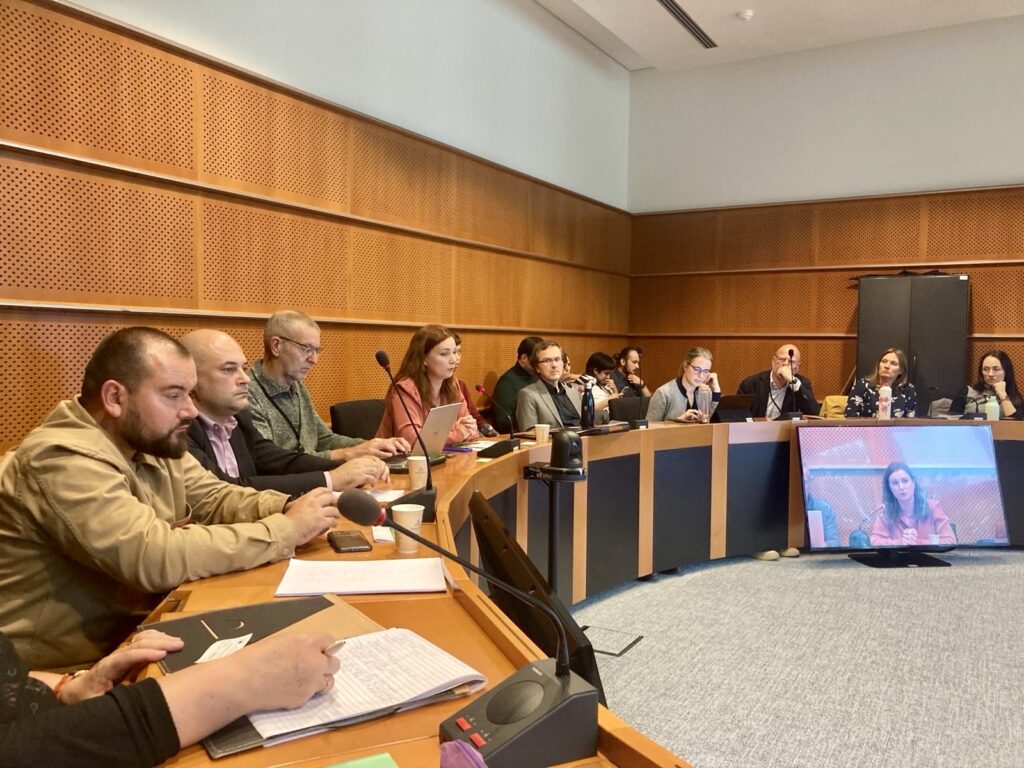
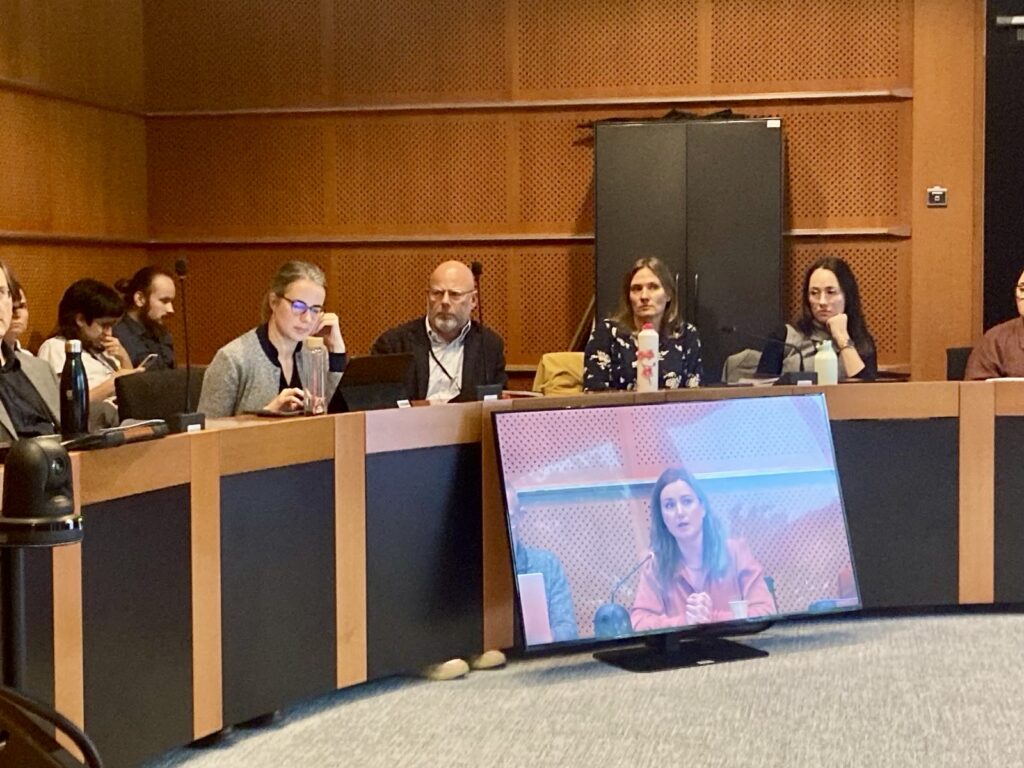
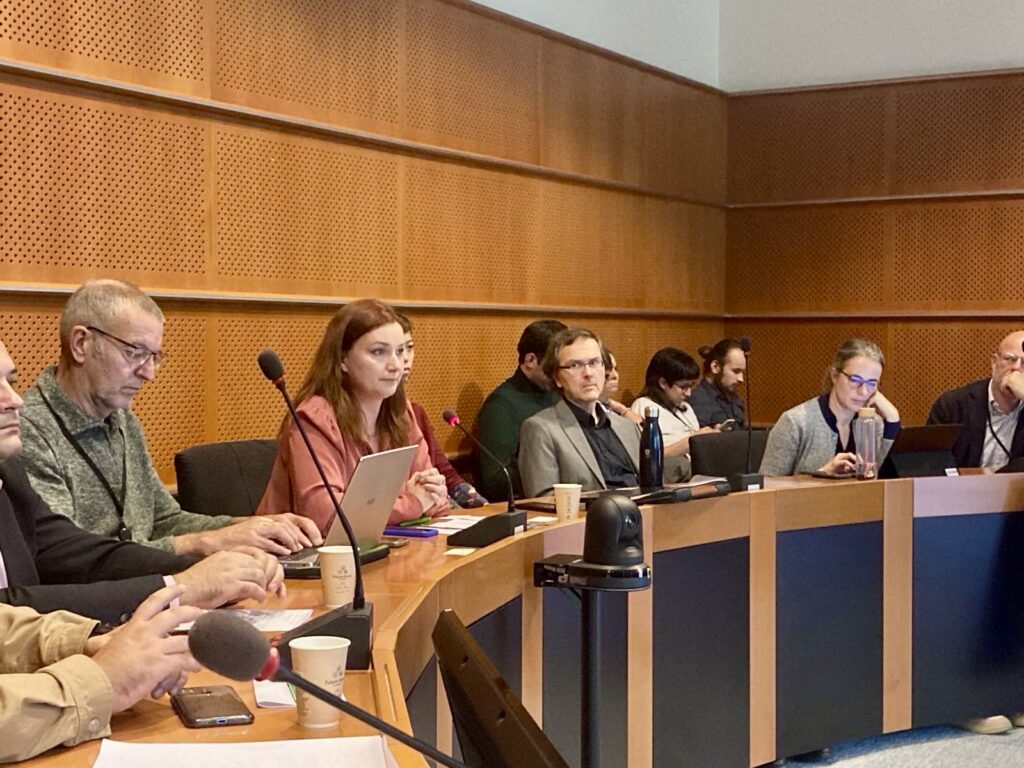
The main event of the visit was “The Balkans at the Crossroads: Lithium Mining, Human Rights and the Struggle for Environmental Justice” at the European Parliament. This gathering brought together activists, academics and representatives of civil society who discussed the environmental and social consequences of lithium mining projects. In the opening speech, Sara Mathieu, who was the host, MEP from the Greens/EFA group, emphasized the importance of solving human rights violations and environmental degradation within the EU’s green agenda, not as opposition to the EU, but as a critical reflection on its role in supporting controversial projects.
Among the speakers was Iva Marković, program director of Polekol and co-founder of the Right to Water initiative. Marković spoke about the emergence of the environmental movement in Serbia, which, as she noted, did not arise overnight, but developed through years of resistance to problems such as small hydropower plants, air pollution, coal exploitation, illegal landfills, destructive energy transitions, deforestation, etc. These concrete struggles have encouraged a strong network of solidarity and cooperation within the environmental sector in Serbia.
Marković emphasized that this movement does not have an intrinsic anti-Western or anti-Eastern orientation and that there should be no mystification of its origins due to active resistance to lithium mining projects uncritically supported by EU officials. Foreign companies from China and Canada are already operating and polluting in the eastern regions of Serbia and are equally under the scrutiny and condemnation of civil society. She clarified that the opposition to lithium mining is not driven by global geopolitical agendas, but by the genuine environmental concerns of local communities. These communities, potentially threatened by lithium mining, she said, already embody a sustainable green transition, relying on fertile land, clean water and locally produced food. This connection with their environment and direct concern for their livelihood naturally positioned them as leaders in the fight against pollutants.
Our representative also explained that the repression against environmental activists is happening in the context of non-violent protests in Serbia, pointing out that the gatherings were peaceful and organized without violence and destruction. Marković condemned the escalation of tabloid pro-government media targeting activists, portraying activists as “eco-terrorists”, explaining that citizens turn to street protests and roadblocks as a last resort, only after exhausting all institutional channels – such as petitions, public consultations and various appeals – which are routinely ignored. Reducing the space for the (institutional) work of civil society organizations is certainly not a recipe for the sustainability or stability of the region.
Referring to the dramatic events of this summer, Marković pointed out that the activists were faced with great repression, including 41 arrests and the targeting of 39 citizens’ associations as “foreign agents” and “eco-terrorists” in the media. It is interesting that the EU, despite decades of promoting public engagement and involvement in decision-making, has remained conspicuously absent in the face of recent attacks on individuals exercising their right to engage and exercise their democratic civil rights. Marković suggested that this, along with the unequivocal support for the controversial mining project, could further damage the reputation of the EU in Serbia and beyond.
Other speakers were Diego Marin from the European Environmental Bureau, Vladimir Topić and Zoran Poljašević from Bosnia and Herzegovina, Ivan Bjelic, Jevđenije Julijan Dimitrijević, Aleksandar Matković and Jovan Rajić from Serbia, moderated by Johanna Sidov from the Berlin office of HBF. Topić and Poljašević discussed the environmental damage that the exploitation of lithium and other critical raw materials is beginning to inflict on Bosnian ecosystems, giving a vivid picture of the threats the projects pose to sources of clean water and the fertile land that is essential to community life. Activists also shared personal accounts of threats and intimidation they faced, even losing their jobs.
Rajić presented evidence of legal violations and repressive actions surrounding mining projects, explaining that the mining project is already covered by a veil of legal and procedural violations and that there is no evidence that this will not continue. Matkovic spoke about his personal experience of death threats after publishing articles criticizing mining projects. He continued with broader geopolitical implications, such as the role of China, which challenges the EU’s strategic goals for resource separation and diversification. Both Rajić and Matković appealed to the EU to reconsider its support for such ventures, arguing that they incite violence and undermine Serbia’s democratic foundations.
Bjelić and Dimitrijević testified firsthand about the repression, spending 3 days in prison after a peaceful blockade in August, and elaborated on the criminalization of activism in Serbia. Bjelic once again underlined the double narratives from the top of the Serbian state: one for the Western public, which portrays the environmental movement as an alleged far-right pro-Russian agency, while at the same time, for the local public, it accuses the same movement of being Western mercenaries. Dimitrijević presented the findings of the Serbian Academy of Sciences and Arts on the Jadar project, which showed overall negative consequences for Serbian society.
Marin ended the event with a call to action, urging the EU to align its policies with the long-term needs of the environment and citizens in the Western Balkans. His appeal underscored the delegation’s core message that sustainable development must prioritize human and environmental well-being over the short-term economic gains of private companies with extractive portfolios, and, finally, that uncritical support for the Jadar project represents a reputational risk for the EU.
The delegation also held numerous individual meetings with various EU stakeholders and hopefully left a significant mark by raising this topic, strengthening dialogue with EU officials and reinforcing the urgency of environmental justice and human rights advocacy in the Western Balkans. The visit highlighted the complex, often contradictory dynamics surrounding lithium mining projects. There is an urgent and crucial need for the EU to support a truly just and community-centred green transition in the region, as well as to support the people fighting for the values it promotes – democracy and a safe environment for all.