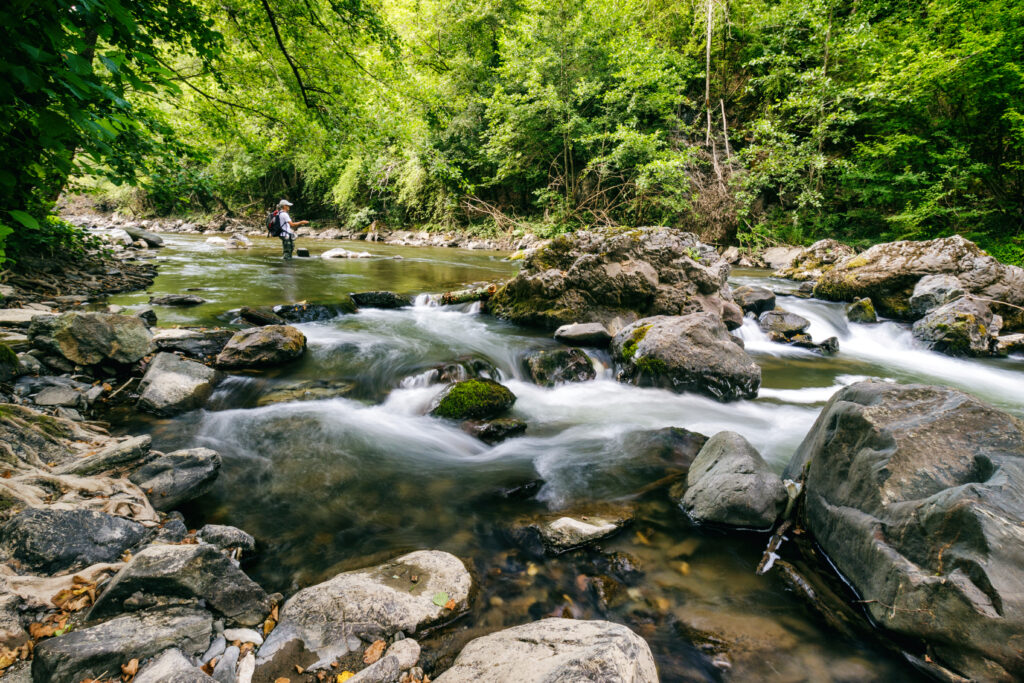
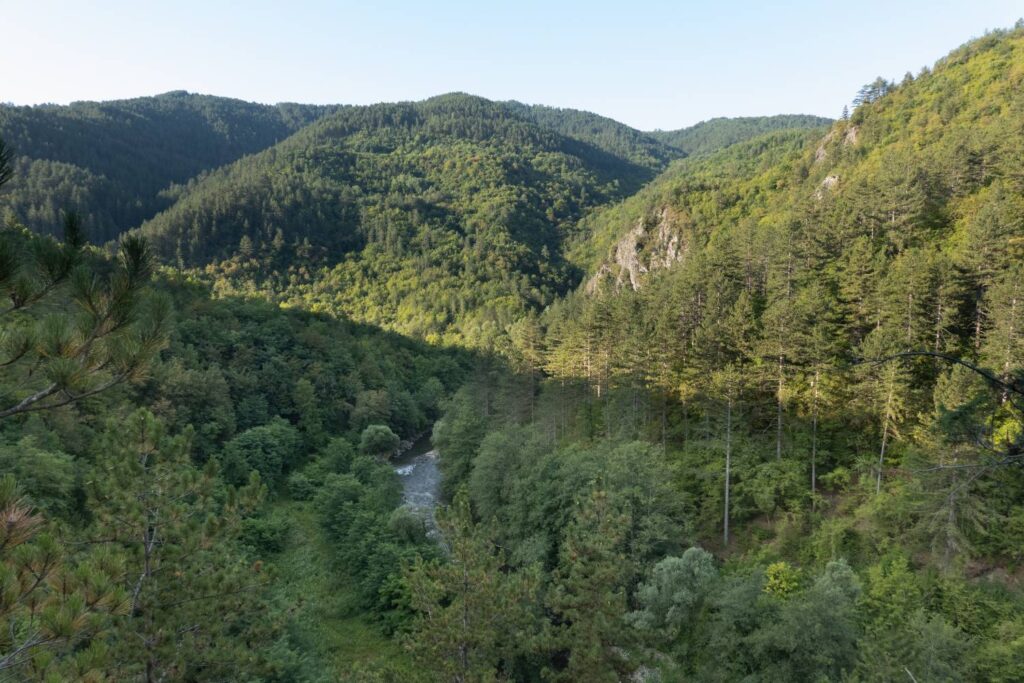
Most of the course of the Studenica River lies within the “Golija–Studenica” Biosphere Reserve, which was designated in 2001 as Serbia’s first UNESCO Biosphere Reserve. The inaccessible terrain carved by the Studenica River has contributed to the preservation of a rich diversity of plant and animal life. This area has exceptional natural and cultural value and is rich in endemic and relict species—species that exist only in a limited area and those that have survived here since ancient times.
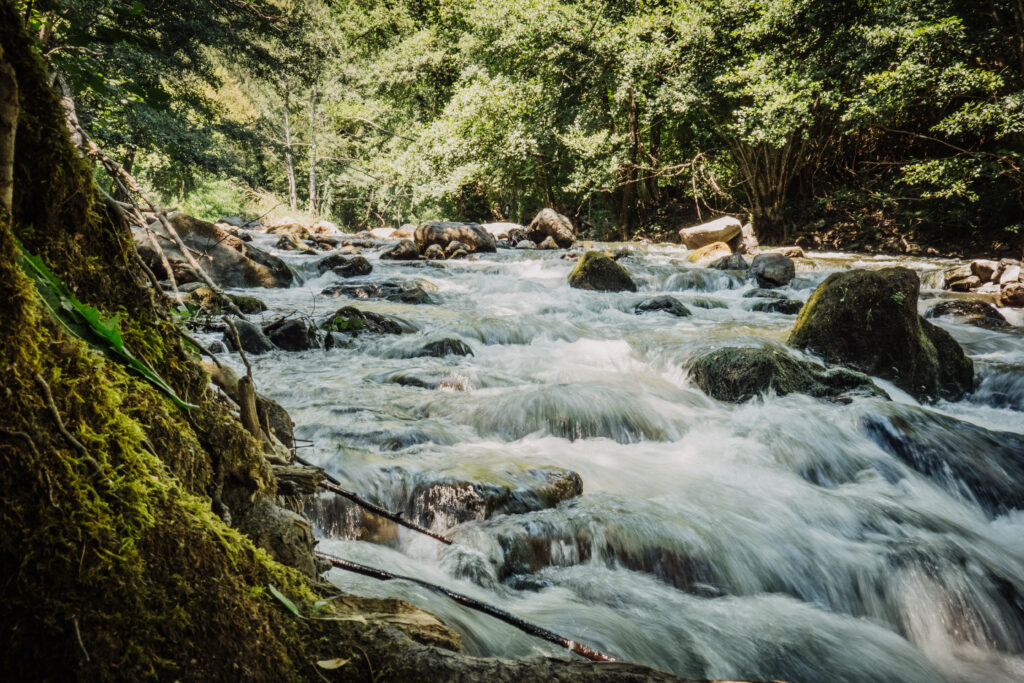
The Studenica Monastery, an endowment of Stefan Nemanja, is also located here and has been under UNESCO protection since 1986. The Studenica is a fast, cold, and exceptionally clear mountain river with a rocky and gravelly bed. In its upper course, brown trout (Salmo trutta) predominates. Further downstream, toward its confluence with the Ibar River, the Studenica naturally transitions from a typical mountain salmonid river into a mixed salmonid–cyprinid river, where species such as the Balkan barbel (Barbus balcanicus) become increasingly prevalent.
The aim of the field research that I conducted together with Dr. Ana Marić, Assistant Professor at the Faculty of Biology in Belgrade, and Dr. Jelena Stanković Ristić, Research Associate at the Institute for Biological Research, in August 2025 was to determine the current status, composition, and quality of the fish community of the Studenica River downstream from the boundary of Golija Nature Park to its confluence with the Ibar River. Prior to the fieldwork, we reviewed available studies on the Studenica and the Ibar in order to identify which species we could expect to encounter. We selected five sites that evenly cover the investigated stretch of the river, allowing us to obtain a realistic picture of the fish species inhabiting it. Our decision to study this section of the river was not accidental. In most previous research, data referred primarily to the stretch located within the protected area. However, nature does not recognize administrative boundaries—the river is a single, integrated, and dynamic system. It is precisely in the lower course of a mountain river that the greatest species diversity is expected, which this research has confirmed. This section of the river is also important because of the connection between the Studenica and the Ibar River into which it flows: many species from larger rivers enter smaller tributaries to spawn, making the preservation of these connections essential.
We sampled fish using an electrofishing device—a tool that creates an electric field in the water and temporarily stuns the fish. This method is standard in research as it is both highly efficient and safe for the fish. During sampling, we wade upstream through the water, collecting the stunned individuals with nets and placing them in buckets of water. On the riverbank, we identify each fish to species and take measurements. After a brief recovery period in fresh, oxygenated water (using an aeration pump), the fish are returned to the river.
We recorded a high diversity in the lower course of the Studenica River—a total of eight fish species. Two of these species are strictly protected (stone loach and Balkan loach), four are protected (brown trout, chub, spirlin, and Balkan barbel), and only two of the eight species recorded are unprotected (barbel and gudgeon). It is important to emphasize that all recorded species are native to the region, and no non-native species were observed. This is particularly significant given that in recent years almost every watercourse has shown the increasing presence of non-native species in our waters. As expected, in the lower section of the river, which takes on a cyprinid character, we found brown barbel (Barbus balcanicus), spirlin (Alburnoides bipunctatus), and chub (Squalius cephalus) at nearly all sampling points. The stone loach (Cottus gobio), a strictly protected species, was recorded only at the uppermost point, just below the boundary of the nature park, whereas literature indicates that it was formerly present along the entire river course. According to the literature, the river also once supported grayling (Thymallus thymallus), but we did not find it during this survey. Mountain rivers like the Studenica are classified as salmonid rivers because they host species from the trout family (Salmonidae), such as grayling and trout. These species are typical inhabitants of clean, cold, and fast-flowing mountain waters, highly valued by anglers, and serve as symbols of these rivers—their presence guarantees the ecological value and preservation of the entire area. The finding of the Balkan loach (Sabanajewia balcanica) is also significant, as this species is strictly protected in Serbia. We found it at a site in Ušće. This species, endemic to the Balkan Peninsula, inhabits smaller, clean streams with fine gravel-sand substrates and relatively fast currents and is highly sensitive to pollution and habitat modification. There are no reliable and detailed data on the actual distribution of this species in Serbia, and according to available literature, this is the first record of the Balkan loach in the Studenica. Balkan loach populations are isolated from each other, making habitat protection critical. The species known locally as gudgeon (Barbatula barbatula) was also recorded for the first time in this river, likely overlooked in previous surveys due to its low abundance. This highlights the following point: it is essential to conduct detailed research on our rivers to ensure that human activities do not unintentionally threaten biodiversity and significant species whose presence may still be undocumented.
Why are some species protected? Primarily, protection measures are introduced due to declining population numbers, habitat loss and degradation, limited distribution, or threats such as pollution, overfishing, or pressure from invasive species. Protection does not always mean that a species is on the verge of extinction, nor does it necessarily mean that the species has direct utility to humans as food or medicine—although these are often reasons for protection. In addition, species may be placed under protection to enhance the biodiversity of an area or serve as important indicators of a healthy and well-preserved natural habitat. If a protected species can survive in a particular location, it indicates that the water is clean, the habitat is of high quality, and many other organisms dependent on the same conditions also thrive there. A good example is salmonid species: although brown trout is widespread, its presence indicates that the water is clean and oxygen-rich, the habitat is stable and healthy, and the river supports an abundance of aquatic insects and crustaceans that serve as its food. Therefore, by protecting such a species, we are in fact safeguarding the entire ecosystem—for all living beings, including ourselves.
The Republic of Serbia is a signatory to numerous international legal instruments that oblige us to protect habitats and species, including the Convention on Biological Diversity (CBD), the Bern Convention (on European wildlife and flora), the Ramsar Convention (on wetlands), CITES (on trade in endangered species), the Bonn Convention (on migratory species), and, finally, the Aarhus Convention—on access to information, public participation, and legal protection in environmental matters. In addition, Serbia is in the process of aligning its legislation with the Habitats Directive and is working on identifying and designating candidate sites for the European ecological network Natura 2000, which further reinforces the obligation to conserve valuable habitats and species. The principles of these international conventions are incorporated into our national regulations, specifically the Rulebook on the Declaration and Protection of Strictly Protected and Protected Wild Species. Serbian waters are home to approximately one hundred fish species, with numbers varying depending on the author, changes in taxonomy, and whether non-native species are included. Considering all these variations, it can be said that roughly thirty fish species are protected, and a similar number are classified as strictly protected under our national Rulebook on Protected Species.
Most of the species recorded in the Studenica fish community are subject to various levels of protection under the current national regulations. The strictly protected species, stone loach and Balkan loach, are listed under the Bern Convention and the Habitats Directive and require special habitat conservation measures as well as designation of specially protected areas. The Balkan barbel is included in Annex III of the Bern Convention, as well as in the Habitats Directive as a species of community interest, for which disturbance, disruption of reproductive cycles and migrations, removal from the wild, and exploitation are subject to criminal liability. The spirlin is also listed in Annex III of the Bern Convention as a protected faunal species. Protected species such as brown trout, chub, and Balkan barbel also have their conservation status and protection regime regulated by national fisheries legislation.
Although public awareness of the importance of nature conservation is undoubtedly growing, environmental protection and the safeguarding of wildlife in our country remain at a very low level. Without strengthening institutional responsibility and investing in basic infrastructure, it is difficult to expect that our rivers, forests, and air will be truly preserved and protected. We treat rivers as open dumps and recipients of wastewater because we lack regulated landfills, sewage networks, and wastewater treatment facilities.
In addition to direct pollution, the natural characteristics of rivers are degraded through flow regulation. Damming a river disrupts important ecosystem functions: it alters the shape and dynamics of the flow, interferes with natural sediment transport, slows water movement, increases the accumulation of pollutants, and changes water quality. These changes reduce the river’s ability to self-purify, break river continuity, and completely transform natural habitats, leading to a gradual loss of native biodiversity and inadvertently creating opportunities for non-native and invasive species. Although the planned dam is outside the protected zone, it would have a significant impact on the Studenica River both upstream and downstream of the structure. Of particular concern is the fact that four-fifths of the Studenica’s course is already under protection, while the lower 10 km to its confluence with the Ibar River remains unprotected. Our research results indicate that there is a justified need to extend protection measures to this section as well. According to national regulations, water bodies are classified as either natural or significantly modified. The Studenica is categorized along its entire course as a natural water body of type IV—that is, a natural mountain river above 500 m in elevation with a coarse, rocky substrate. The construction of a dam and formation of a reservoir would alter its characteristics and values, which were the reasons for its protection, and its status would have to be reclassified as a significantly modified water body, presenting numerous ecological, hydromorphological, and management challenges. Research shows that reservoirs in mountain rivers—especially those with steep catchments and high sediment loads, such as the Studenica—can rapidly fill with sediment, gradually losing their capacity. Maintaining such reservoirs is challenging and costly in the long term, making it essential to carefully weigh the ecological risks against the limited energy benefits that can realistically be achieved. While hydropower plants have long been seen as a source of clean, renewable energy, awareness is growing that their ecological cost can be very high.
In Europe, dams and other river barriers are already being actively removed to restore the natural continuity and connectivity of waterways. As part of the broader EU Green Agenda, the goal is to restore at least 25,000 km of free-flowing rivers by 2030, which involves removing barriers and reinstating natural conditions critical for biodiversity. A notable example of best practice is the removal of four dams on the Klamath River in the United States—the largest such undertaking in history. By dismantling the hydropower dams, the river was allowed to flow freely for the first time in over a century, restoring more than 600 km of river habitats and enabling salmon to migrate to their traditional spawning grounds. Salmon returned to upstream sections that had been inaccessible for decades within the first few months after the removal of the dams. The Chinese paddlefish (Psephurus gladius), a uniquely shaped species related to sturgeon and endemic to the Yangtze River, was officially declared extinct in 2020. The last living specimen was recorded in 2003, and the main causes of its disappearance were overfishing and the construction of numerous dams on the Yangtze, which disrupted its migration routes. This was one of the reasons behind China’s ecological restoration project of the Yangtze River starting in 2020, which involved dismantling around 300 dams and deactivating hundreds of small hydropower plants on the Red River, one of the Yangtze’s tributaries.
The Studenica is an exceptionally valuable mountain river, with its upper course already enjoying the status of a UNESCO Biosphere Reserve, while its lower course still lacks adequate protection. Research confirms that preserving the entire river is crucial for the survival of native and protected fish species. The river is already exposed to a variety of pressures, including existing hydrotechnical structures, quarries, fishing, deforestation, and the resulting increased erosion—all of which contribute to the gradual loss of biodiversity. When discussing pressures on a river, they are often considered individually, as if acting separately. In nature, however, all factors impacting a river act simultaneously, and their cumulative effect can be far stronger and more harmful than any single pressure. This is why it is essential to assess the overall impact on the Studenica ecosystem and implement measures that protect it as a whole. The disappearance of grayling from the Studenica and the observed decline in brown trout populations indicate that these pressures are already affecting the ecosystem. This underscores the need for greater efforts to preserve the Studenica through adequate protection, responsible management, and the implementation of conservation measures to maintain its natural state, as well as renaturalization efforts to restore sections of the river where the natural flow has already been altered or exposed to various pressures. It is essential to expand research to cover the entire river course to determine the current status of the fish community and urgently introduce protection measures that include the lower section of the Studenica, thereby preserving its natural integrity and rich biodiversity.
Dr. Jelena Čanak Atlagić, author of the text; Photo: Private archive
The author is a research scientist at the Institute for Biological Research. Dr. Jelena Čanak Atlagić’s research focuses on hydroecology and the ichthyology of freshwater ecosystems, with a particular interest in trout streams, which she studied as part of her doctoral dissertation. She has many years of experience in fieldwork, laboratory processing of materials, and the identification of macroinvertebrates, as well as in publishing research on ecological interactions within macroinvertebrate communities, fish ecology, and feeding habits.